Dinesh Jinjala

10Personal project

Need-to-Know: a data agent built not to leak

Author, open source

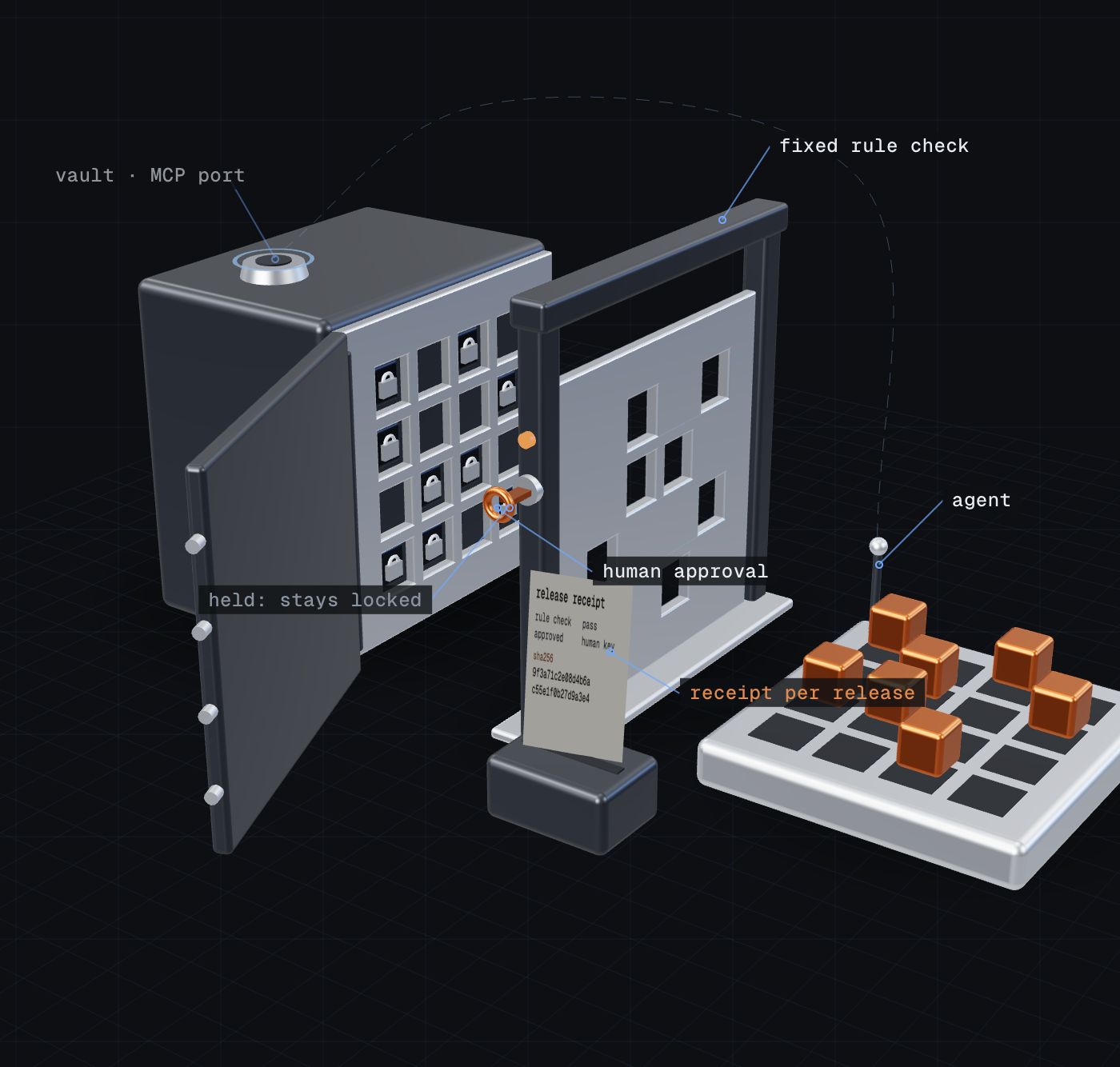
A data-analysis agent I built so that sensitive data stays put. Data sits in an MCP vault, fixed rules decide what may be released, a person approves each release, and every release comes with a receipt anyone can verify.

5
MCP tools, none returns raw rows
Every release
approved by a person
Receipt
anyone can verify it offline

TypeScript / MCP / AI agents
Problem

Teams want AI agents to analyze sensitive data, but an agent with query access can leak identifiers or small groups that point to individuals. A prompt instruction is not a control that an auditor can verify.

Approach

  • Raw records sit in a SQLite vault behind an MCP server with exactly five tools and no raw-row query tool, so identifiers cannot leave through the tool schema.
  • A typed release contract with no LLM in it enforces the policy: an allowlisted purpose and audience, aggregate-only columns, groups of at least 3, no unapproved joins or filters, and content hashes over the exact payload.
  • Each release needs human approval in the agent harness and is re-checked at execution time; any failure blocks the release and writes an audit record.
  • Evidence bundles and a verify-receipt CLI let a reviewer confirm offline that approval came before release and recompute the hashes.
  • Adversarial test gates attempt raw exports and small-cell leaks and must end with zero releases.

Architecture

  1. Data steward
  2. LLM agent
  3. Vault MCP
  4. Release contract
  5. Human approval
  6. Verifiable receipt

Outcome

I built it for the TrueForge Agent Harness Hackathon. The adversarial gates end with zero releases. In the demo, 12 of 13 scripted runs finished cleanly, and I document the one that didn't.

What I learnedPutting the policy in deterministic code outside the model is what lets someone who does not trust the agent check the guarantee.

Building something like this?

Tell me about it